June 30, 2026
Van vehicle wraps turn the large flat panels of a commercial vehicle into mobile advertising that works while the van loads, parks or drives. This guide covers material choice, scalable fleet design, the logistics of a staged rollout, cost per unit and the United Kingdom road rules that apply to a branded van.
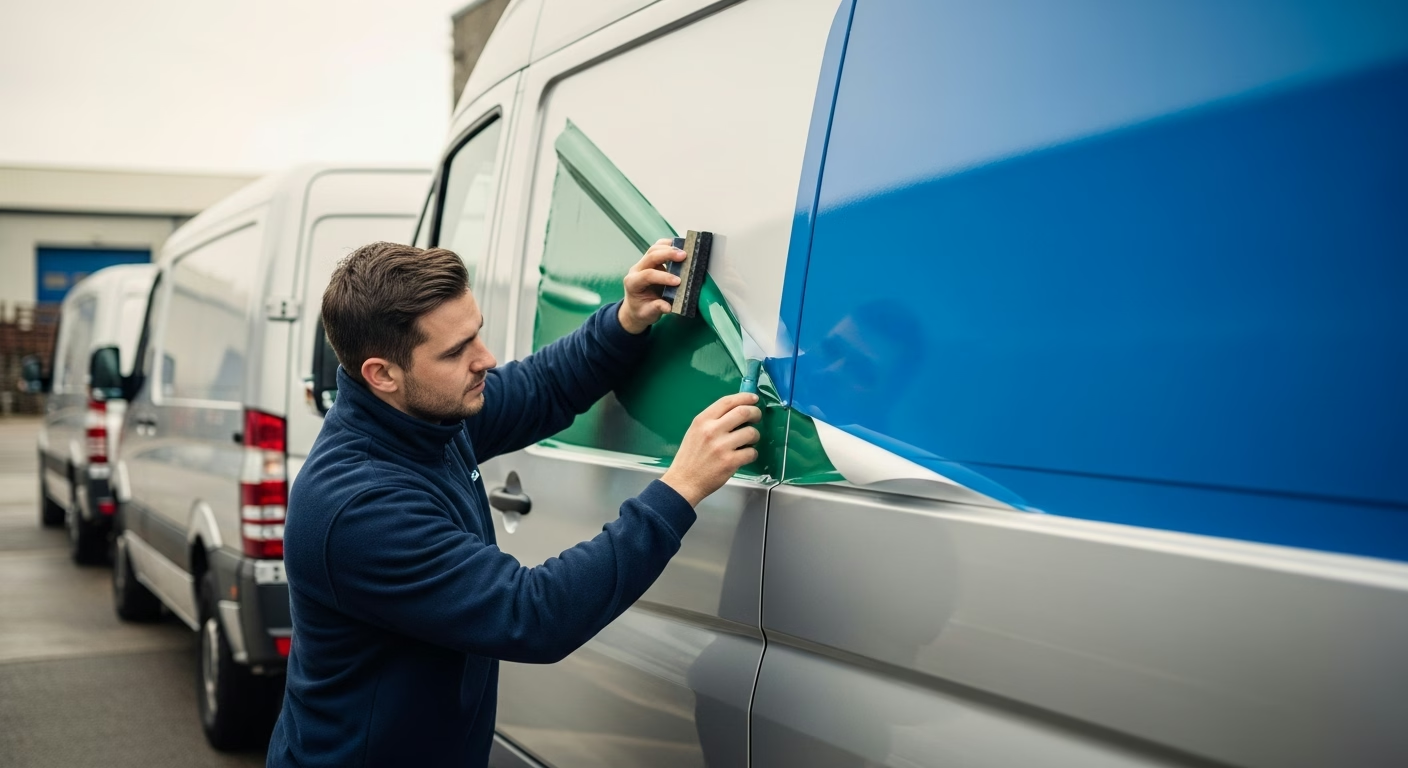
A panel van offers some of the largest flat surfaces on the road, which makes it a natural carrier for a brand. Van vehicle wraps convert those side and rear panels into mobile advertising that works while the vehicle is parked, loading or moving through traffic. For a service company, a delivery operation or a building firm, the wrapped van often reaches more local eyes in a week than a static billboard reaches in a month.
The commercial scale is significant. The United Kingdom registered 315,422 new vans, pickups and 4x4s in 2025, with large vans alone holding a 66.7 per cent share of that market, according to light commercial vehicle registration data published by the SMMT. Every one of those vehicles is a potential branded surface, and across Europe the working fleet is larger still, as set out in the ACEA report on vehicles on European roads.
This guide explains how a van wrap differs from a car wrap, which materials suit large flat panels, how to keep branding consistent across a mixed fleet, what a rollout involves and which rules apply in the United Kingdom. The principles also describe how the wrapping of a vehicle protects the original bodywork, a point covered in more depth in the overview of what a vehicle wrap is for a business.
The shape of a van plays to the strengths of vinyl film. Large side panels, a tall rear and a flat roof line give a designer a clear canvas with few interruptions. Compared with the curves of a passenger car, a typical box van presents wide uninterrupted areas where a logo, a strapline and a phone number sit at a readable size from across a car park.
That geometry also influences material choice and cost. Flat panels can accept calendered film, which is less expensive than cast film, while the cast grade stays reserved for the curved sections around the bumpers, mirrors and wheel arches. The trade-off between the two grades is set out in the reference on vinyl vehicle wrap materials, and it matters more on a van than on a car because the flat surface area is so much larger.
Visibility is the third advantage. A working van spends its day in residential streets, retail parks and city centres, exactly where the target audience lives and shops. The encyclopaedic overview of wrap advertising describes how this form of out-of-home media earns repeated local impressions at a low cost per view once the wrap is fitted.
Three levels of branding cover most commercial briefs, and the right one depends on budget, the existing base colour and how much visual impact the fleet needs.
A full wrap covers the entire painted body, including a colour change if the design calls for one. It suits an operator that wants edge-to-edge imagery, a bold background colour or a complete identity refresh. Because it uses the whole surface, a full wrap carries the highest material and labour cost, and it is the level most likely to trigger the registration update described later in this guide.
A partial wrap places printed panels on the main side and rear areas while leaving parts of the original colour exposed. For a fleet that already runs a single base colour, this approach keeps the identity consistent and reduces both film and fitting time. The method also limits how much of the body is altered, which can simplify compliance when the dominant colour stays the same.
Cut lettering and logo decals carry the essential message, the company name, the contact details and a website, without covering large areas. This is the lightest and least expensive option, and it overlaps with adhesive lettering work. The detail of that craft is covered on the page dedicated to vehicle lettering and decals, which suits operators that need a clean, low-cost signature rather than a full graphic treatment.
Brand consistency is the point where a fleet wins or loses value. A row of vans that all read the same way builds recognition far faster than a set of vehicles that each carry a slightly different layout. The challenge is that a fleet rarely uses a single body type, so one fixed artwork cannot stretch across every model unchanged.
The solution is a scalable design system rather than a single image. Fixed zones hold the logo, the dominant colour block and the key message, and the layout then adapts to each panel size. A small city van, a medium panel van and a long-wheelbase model share the same visual grammar even though the exact proportions differ. The broader principles of building such a system are set out in the guide to vehicle wrap design.
Colour management deserves equal attention. A brand colour printed on film should match the same colour across every vehicle, every batch and every reprint, so a defined colour reference travels with the artwork. Manufacturers in the wider plastics industry control this through the calendering and coating stages described by the British Plastics Federation, and a professional studio carries that discipline through to the printed livery so that the fleet stays uniform over time.
Wrapping one van is a single job. Wrapping a fleet is a logistics exercise, because every vehicle taken off the road for fitting is a vehicle not earning. A staged rollout keeps the operation running while the parc is converted.
The cost per unit falls as the run grows, because design, colour proofing and print setup are fixed costs spread across more vehicles. The way surface area, film grade and labour combine into a final figure is broken down in the analysis of vehicle wrap cost, and the same logic explains why a ten-van order rarely costs ten times a single wrap. For large or repeat programmes, a structured quote through the online configurator speeds up the costing stage.
A fleet identity does not stop at the wrap. Roof markings, rear chevrons on vehicles that work near traffic, and branded accessories all extend the same visual language. Customised fittings and finishing parts are covered under customised vehicle accessories, which round out the look of a working van.
Manufacturers and large operators sometimes go further, using a coordinated treatment across a whole model range. That approach, known as range animation, applies a shared design theme to a line-up of vehicles and is detailed under range animation for vehicle line-ups. The encyclopaedic entry on the fleet vehicle shows how central a unified parc has become to commercial operations.
A branded van still has to meet road rules, and a wrap must never compromise safety equipment or identification. Several points apply directly to commercial vehicles.
When a wrap changes the main colour of the vehicle, the new colour must be recorded on the registration document. The official procedure is set out on the page covering how to change vehicle details on a V5C registration certificate. There is no fee for the colour change itself, and signwriting that leaves the dominant colour unchanged does not require an update.
The registration mark must stay clearly legible, and a vehicle driven with an incorrectly displayed plate can fail its MOT and attract a fine of up to 1,000 pounds, as explained in the rules for displaying number plates. Film must never cover the plate, the lights or the mandatory reflectors. The detailed requirements for lamps and reflectors sit within the Road Vehicles (Construction and Use) Regulations 1986, and the position of registration marks is governed by the Road Vehicles (Display of Registration Marks) Regulations 2001.
For a VAT registered business, the cost of branding a commercial vehicle generally counts as an advertising expense, and the value added tax on it can usually be reclaimed alongside other running costs, as outlined in the guidance on VAT on motoring expenses and the general rules to reclaim VAT on business expenses. The exact treatment depends on the use of the vehicle, so an operator confirms the position with an accountant before filing.
The subject of this article connects with several services offered by Brands And Markets. For a fleet project, the full picture of options sits on the page listing the available services, from full wraps to lettering and accessories.
For a structured programme across several vehicles, working through the online configurator gives a fast cost frame in a few steps, which helps a fleet manager compare partial and full branding before committing the run.
A van is a moving surface that a business already owns, and a wrap turns that surface into consistent local advertising for several years. The decision rests on three questions: how much of the body the brand needs to cover, which film grade suits the flat and curved areas, and how the design scales across a mixed parc of vehicles.
Treating the fleet as a system rather than a set of one-off jobs keeps the identity uniform and lowers the cost per unit as the run grows. A clear design reference, a staged rollout and full compliance with United Kingdom road rules let an operator brand the parc once and keep it recognisable on every street it travels.
A panel van wrap commonly starts around 2,500 pounds for a plain colour change and rises with size and graphic complexity. A full printed livery on a long-wheelbase model can reach 3,500 to 5,000 pounds fitted. The quote reflects surface area, film family, finish and labour rather than the film cost alone. A fleet brief with repeated artwork across several vans usually lowers the unit cost per vehicle, because design, profiling and print setup are spread over a larger run rather than charged in full against a single vehicle.
A change of the main vehicle colour, whether by paint or by a full wrap, must be recorded on the V5C registration certificate and reported to the licensing authority. Partial graphics, signwriting or lettering that leave the dominant colour unchanged do not require an update. The number plate, lights and reflectors must stay fully visible at all times. Insurers usually class any wrap or branding as a modification, so the policy holder informs the insurer separately from the registration update to keep the cover valid.
Cast film applied by a trained fitter commonly lasts five to seven years outdoors, while calendered film on flat panels lasts one to three years. Daily mileage, washing routine and parking conditions all affect that lifespan. A van kept under cover overnight retains its finish longer than one parked in full sun. Planning a removal before the adhesive ages protects the underlying paint and keeps the resale value of the vehicle intact, which matters when the parc is renewed and the old vans are sold on.
A partial wrap or a set of cut decals can carry a logo, contact details and a website across the main panels at a lower cost than a full wrap. For a fleet that already runs a single base colour, partial branding keeps the identity consistent while reducing material and labour. A full wrap becomes worthwhile when the brief calls for a colour change, edge-to-edge imagery or a high-impact design that uses the whole body as a canvas rather than a few defined zones.
A fleet often mixes small, medium and large vans, so a single artwork rarely fits every body unchanged. A scalable design system keeps the logo position, colour blocks and key messages consistent, then adapts the layout to each panel size. Building the brand around repeatable zones rather than one fixed image lets the fleet grow without redesigning the livery for every new vehicle that joins the parc, which protects both consistency and budget over time.
Prêt à transformer votre projet ? Discutons de vos besoins et de la manière dont nous pouvons collaborer.
Adresse : 28 rue Fresnel – F-78310 COIGNIERES
Téléphone : 01 85 40 01 75