June 26, 2026
Colour is the first thing read on a wrapped vehicle, and a wrap opens a far wider palette than factory paint. This guide covers the main finish families, what each colour signals, brand-safe palettes for fleets, the finishes trending now and the UK rules on a colour change.
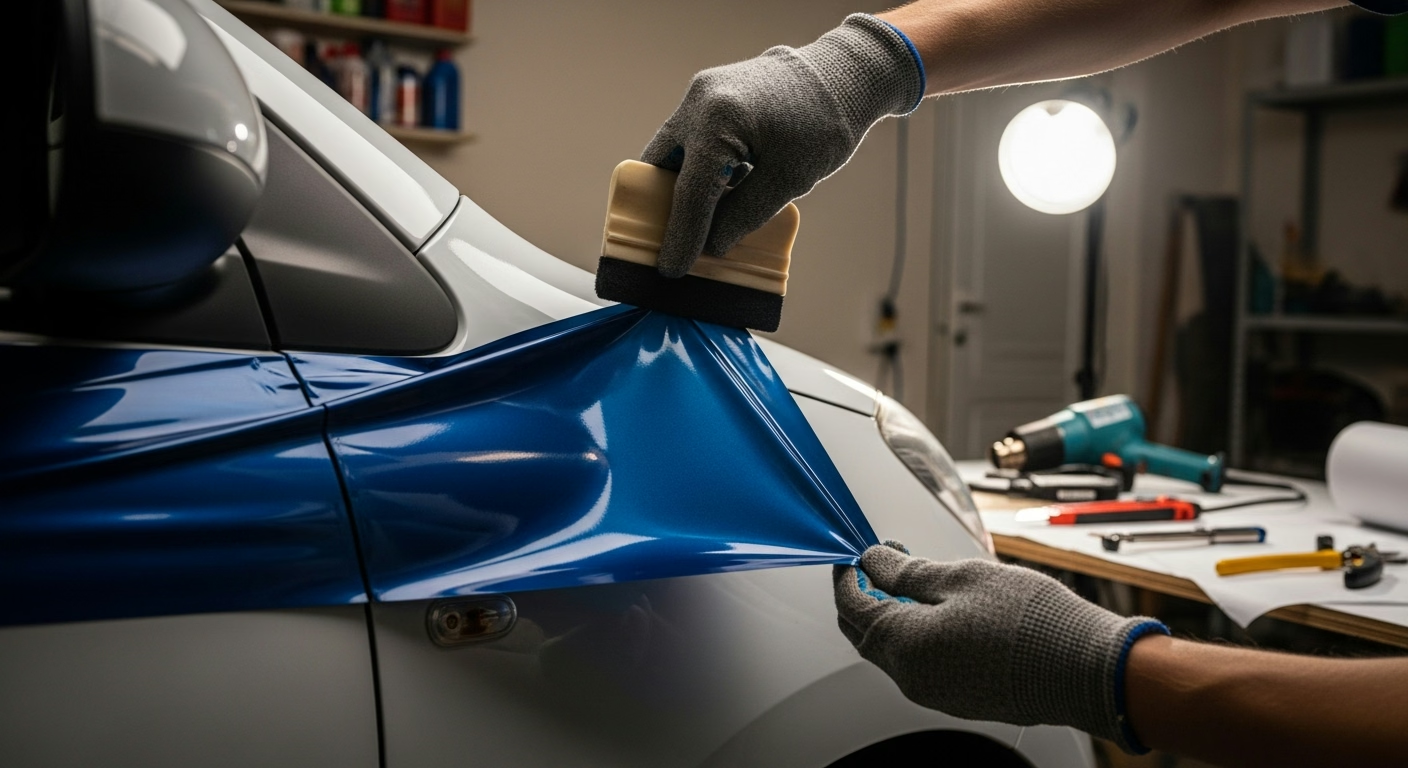
Colour is the first thing read on a wrapped vehicle, long before any logo or message registers. On a moving car or van, a passer-by sees a block of colour and a finish, then everything else. That makes the colour decision the single most visible choice in any wrap project, whether the goal is a personal restyle or a coherent fleet identity.
A wrap also widens the field well beyond what a showroom offers. New car buyers in the United Kingdom overwhelmingly pick monochrome paint, so a non-standard colour or finish is an immediate point of difference. This guide sets out the main finish families, what different colour groups tend to signal, how to build a brand-safe palette for a fleet, the finishes gaining ground at the moment, and the practical limits that shape any final choice.
Colour carries meaning before words do. Research summarised in the field of colour psychology indicates that a large share of an initial impression of a product or surface forms on colour alone, and that a consistent colour used across every touchpoint strengthens recognition over time. Warm tones such as red and orange tend to read as energetic, while cool tones such as blue and green tend to read as calm or dependable. None of this is a strict rule, but it shapes how a livery is perceived on the road.
The starting point matters too. According to registration data published by the Society of Motor Manufacturers and Traders, grey has been the United Kingdom's most popular new car colour for eight years in a row, accounting for more than a quarter of registrations, with black second and blue third. A wrap is one of the few ways to step outside that monochrome default without a respray. Understanding what a vehicle wrap involves helps frame the colour decision as part of a wider technical project rather than a paint swatch chosen in isolation.
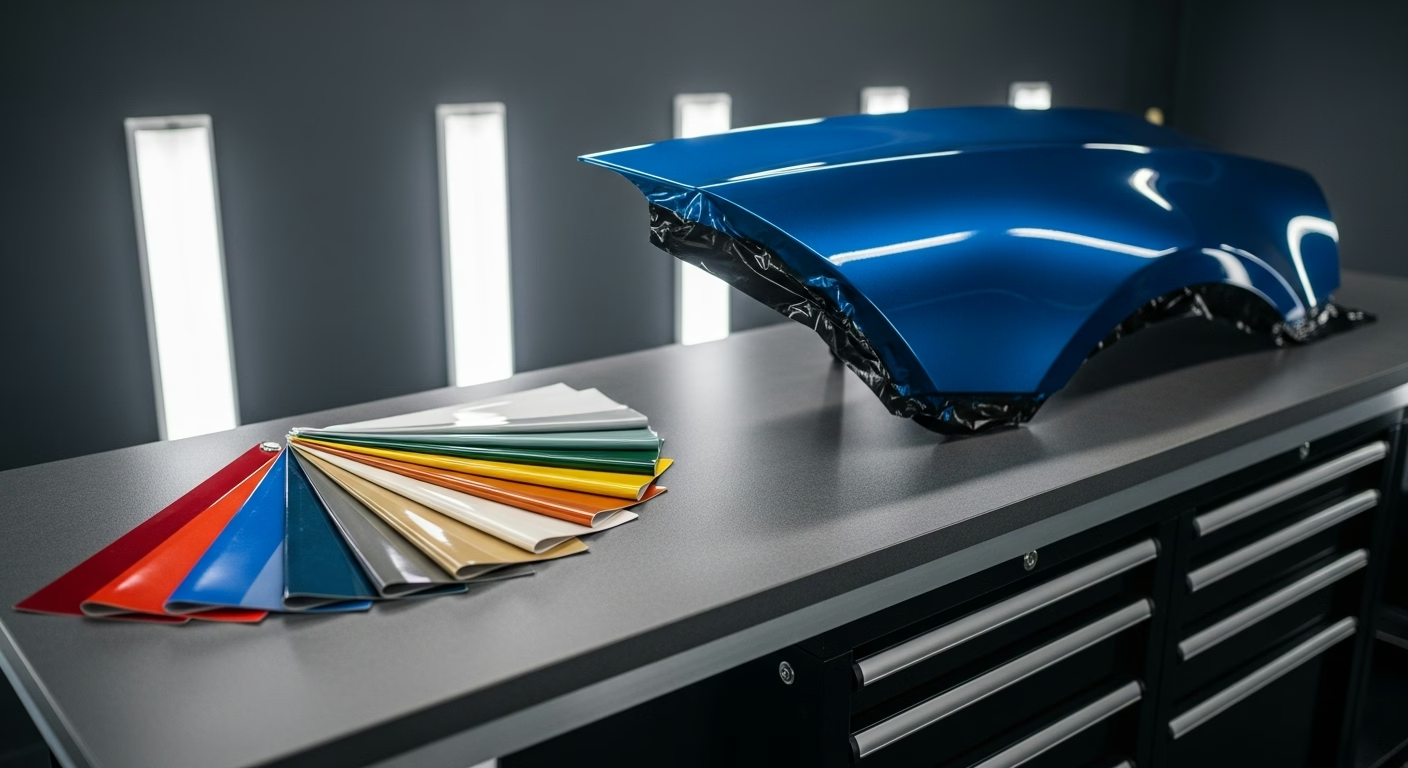
Colour and finish are two separate choices. The same blue reads very differently in gloss, satin or matte, and the finish drives both the visual effect and the day-to-day upkeep. The vinyl families below cover most projects.
Gloss is the closest match to factory paint and the most familiar look. A high gloss surface reflects light sharply, makes colours look deep and saturated, and tends to be the most forgiving in cleaning because dirt sits on a smooth top layer. Satin sits between gloss and matte, with a soft sheen that reads as understated rather than flashy. It suits buyers who want presence without the mirror reflection of full gloss.
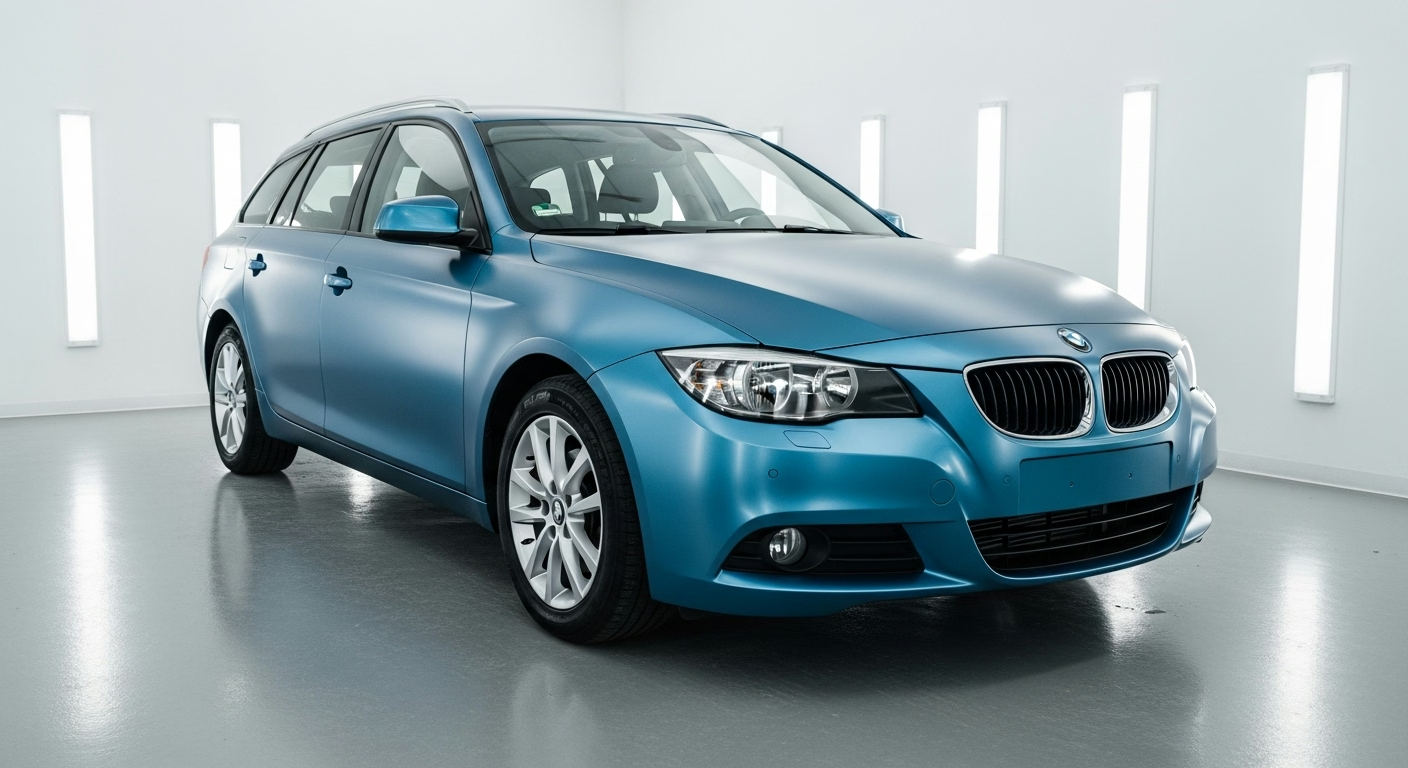
A flat matte removes reflection entirely and gives a vehicle a solid, sculpted appearance. It is a strong styling statement, and it is also the most demanding finish to keep even, since marks and fingerprints show more readily and standard polish cannot be used. A detailed comparison sits in the dedicated guide to a matte black vehicle wrap. Textured films, including carbon-look weaves, add a tactile surface and are often reserved for accents such as roofs, bonnets or mirror caps rather than a whole body.
Metallic and pearlescent finishes contain reflective particles that catch light and shift in brightness as the viewing angle changes, giving depth that a flat colour cannot reach. Colour-shift, sometimes called flip or chameleon film, goes further by reading as two distinct hues depending on the light. These specialist finishes are eye-catching, but they cost more and demand an experienced fitter, because seams and surface defects become more visible. The underlying film also matters: the choice between cast and calendered vinyl affects how cleanly a colour wraps around curves and how long it lasts.
Beyond the finish, the hue itself carries associations that influence how a vehicle is perceived. The notes below are tendencies drawn from wrap advertising practice and colour theory, not fixed rules.
Monochrome tones remain the safe centre of gravity. A crisp white vehicle wrap reads as clean and professional and offers strong contrast for lettering, which is why it dominates commercial fleets. Black and grey read as premium and discreet. Blue is the leading non-monochrome choice and tends to signal trust and reliability, which suits service and technical sectors. Green has been rising fast and pairs naturally with environmental positioning. Red and warmer tones read as energetic and assertive, useful where a brand wants to be noticed quickly, though they can date faster and show wear at the edges sooner on very bright shades.
For a business, colour is not a matter of taste but of consistency. A fleet works as a moving advertisement only when every vehicle carries the same colour, the same finish and the same proportions, so a van seen on a motorway matches the one parked outside a client site. A consistent palette across the whole fleet is what builds recognition over repeated exposures.
Three practical points govern a brand-safe palette. First, the wrap colour should match the brand reference as closely as the film range allows, since a slightly off shade weakens recognition. Second, contrast has to be high enough for any text or logo to stay legible at distance and at speed, which is where coordinated vehicle lettering and decals come in. Third, the finish should suit the working life of the vehicle: a busy delivery fleet rarely benefits from a flat matte that needs careful upkeep, where a gloss or satin holds up better with routine washing.
Two shifts stand out in current demand. Satin and matte finishes continue to draw interest from buyers who want a restrained, modern look that separates a vehicle from glossy factory paint without shouting. At the same time, colour-shift and deep metallic films are popular for show vehicles and standout single cars, where the goal is to be remembered rather than to blend in.
Colour preferences are moving as well. Industry registration figures show green growing sharply, with volumes up by close to half year on year according to the latest national colour data, while grey holds its long lead. For a wrap, the lesson is less about chasing a single trending shade and more about choosing a colour and finish that will still suit the vehicle and the brand several years into the film's life.
An inspiration board has to meet a few hard limits before it becomes a finished wrap. Light is the first: a colour that looks deep under workshop lighting can read lighter or duller in daylight, and a metallic flake that sparkles up close can flatten at distance. Surface shape matters too, as a colour stretches and curves over panels, mirrors and bumpers, so a sample swatch never fully predicts the result on a full body. This is one reason a proper mockup is worth the time before committing.
The law sets the other limits. In the United Kingdom, a full wrap that changes the main colour of a vehicle is treated as a colour change and has to be recorded with the licensing authority, as set out in the official guidance on changing vehicle details on a V5C; the practical steps appear in the section on how to tell the DVLA. Whatever colour is chosen, the number plates must stay compliant under the rules on displaying number plates and the underlying number plate regulations, and lights and reflective surfaces must not be obscured at the annual MOT test. A colour change can also affect a policy, so the modification is worth confirming with an insurer, as general guidance on car modifications explains.
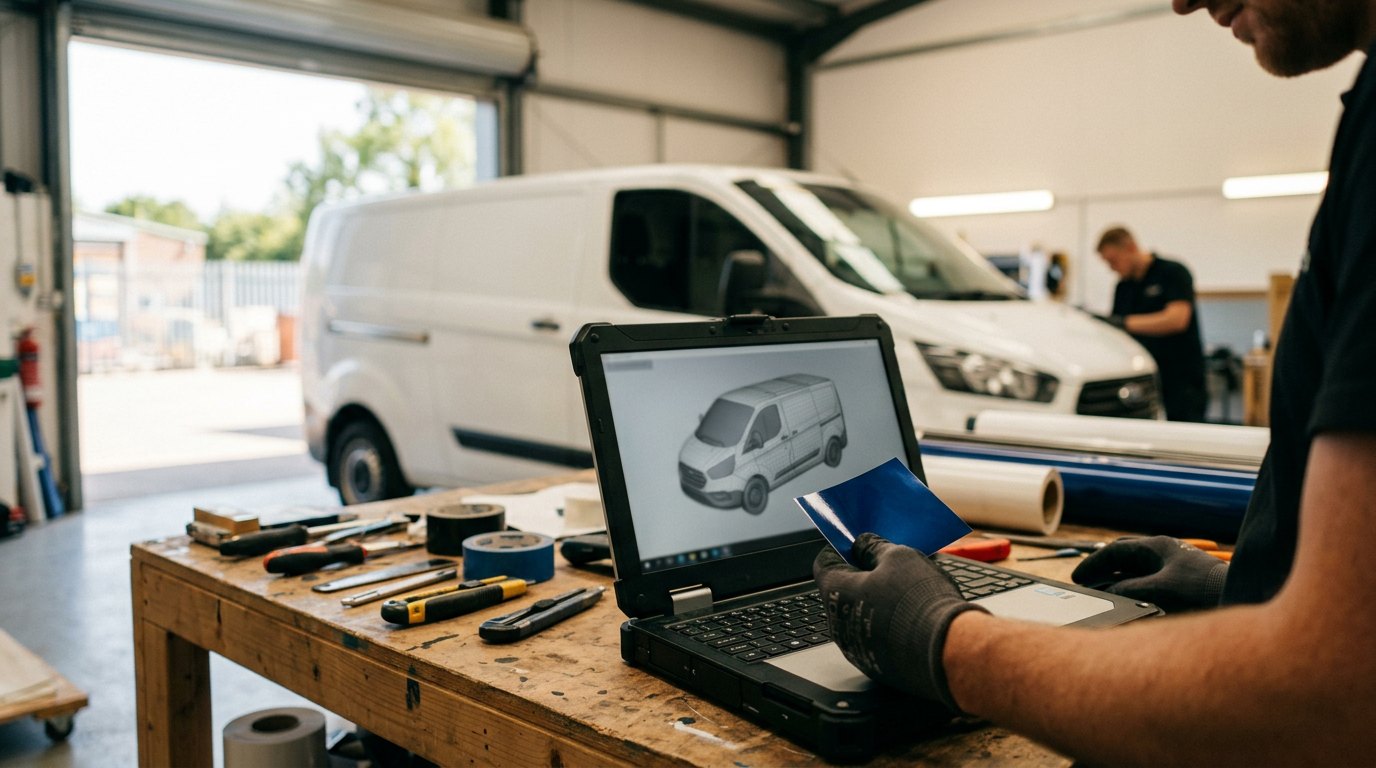
The gap between a mood board and a finished vehicle is closed by a clear brief. A design studio turns colour intent into a defined film reference, a finish and a layout, then validates it on a 2D drawing and a 3D simulation before any film is cut. That stage is where a colour is tested against the real proportions of the vehicle and against the brand reference, and where the cost implications of a specialist finish become clear. The principles behind this work are set out in the guide to vehicle wrap design, and budget expectations are covered in the overview of vehicle wrap cost.
The colour and finish choices in this article connect with several services offered by Brands And Markets. For a fleet that needs a single consistent palette across many vehicles, the approach to range animation and special editions sets out how a colour scheme is rolled out at scale.
For a structured project, working through the online configurator gives a quick way to test colours and finishes and to frame a quote in a few steps.
Choosing vehicle wrap colours is really two decisions taken together: the hue, which carries meaning and recognition, and the finish, which sets both the look and the upkeep. A wrap opens a far wider palette than factory paint, from restrained satin to attention-seeking colour-shift, and that freedom is most valuable when it serves a clear intent rather than a passing trend.
The most durable choices are the ones tested against real conditions before the film is cut: daylight, panel shape, brand reference, working life and the relevant rules on a colour change. Validating a colour and finish on a simulation, and confirming the legal steps, turns an inspiration into a wrap that still works several years later.
A full wrap that changes the main colour of a vehicle is treated as a colour change and has to be recorded on the V5C registration certificate. The owner completes the relevant section of the document and returns it to the licensing authority, with a replacement certificate issued within a few weeks and no fee charged for the update. Partial graphics, stripes, decals or coloured accents that leave the main colour unchanged do not need to be declared. Not recording a genuine colour change can complicate insurance and resale, so the step is straightforward to take at the point the wrap is fitted.
Grey has been the most registered new car colour in the United Kingdom for eight years in a row, accounting for more than a quarter of new registrations. Black sits second and blue third, and together the top three made up close to two thirds of new cars registered in 2025. Green has been the fastest riser, with volumes up sharply year on year. For a wrap, this concentration on a few monochrome tones is exactly why a different colour or finish stands out so strongly in traffic.
Gloss finishes are the most forgiving, because a smooth surface releases road dirt and marks during a routine wash. A flat matte is the most demanding, as fingerprints and grease marks show more readily and standard polish cannot be used. On hue, mid and darker tones tend to hide road film and light swirl better than very pale colours, while very light shades show grime sooner but conceal fine scratches. A finish that matches how often the vehicle is cleaned usually serves better than the most striking option.
The vinyl range is far wider than a standard factory palette and covers gloss, satin, matte, metallic, pearlescent, colour-shift and textured looks. That makes almost any colour intent achievable, including effects that paint cannot easily reproduce. The practical limit is cost and complexity: specialist finishes such as chrome or colour-shift carry a higher price and need an experienced fitter, since they reveal seams and surface defects more readily than a plain gloss. Confirming the exact film reference on a sample and a simulation is the reliable way to match an intended colour.
Prêt à transformer votre projet ? Discutons de vos besoins et de la manière dont nous pouvons collaborer.
Adresse : 28 rue Fresnel – F-78310 COIGNIERES
Téléphone : 01 85 40 01 75