June 16, 2026
Vehicle wrap cost rarely comes down to one number. This guide breaks pricing into vehicle size, surface, film family, finish and labour for the UK and EU markets, with typical ranges from partial wraps to full liveries and what a complete quote should contain.
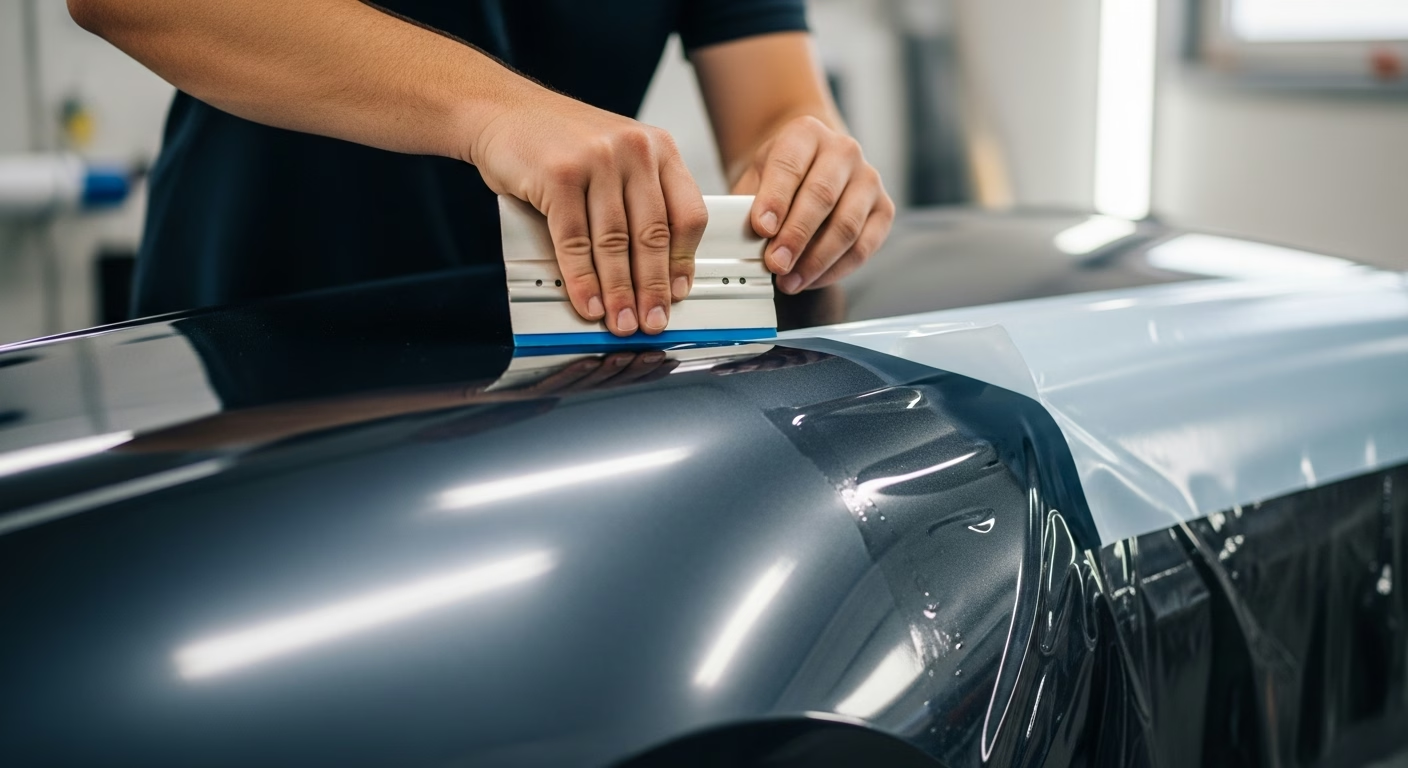
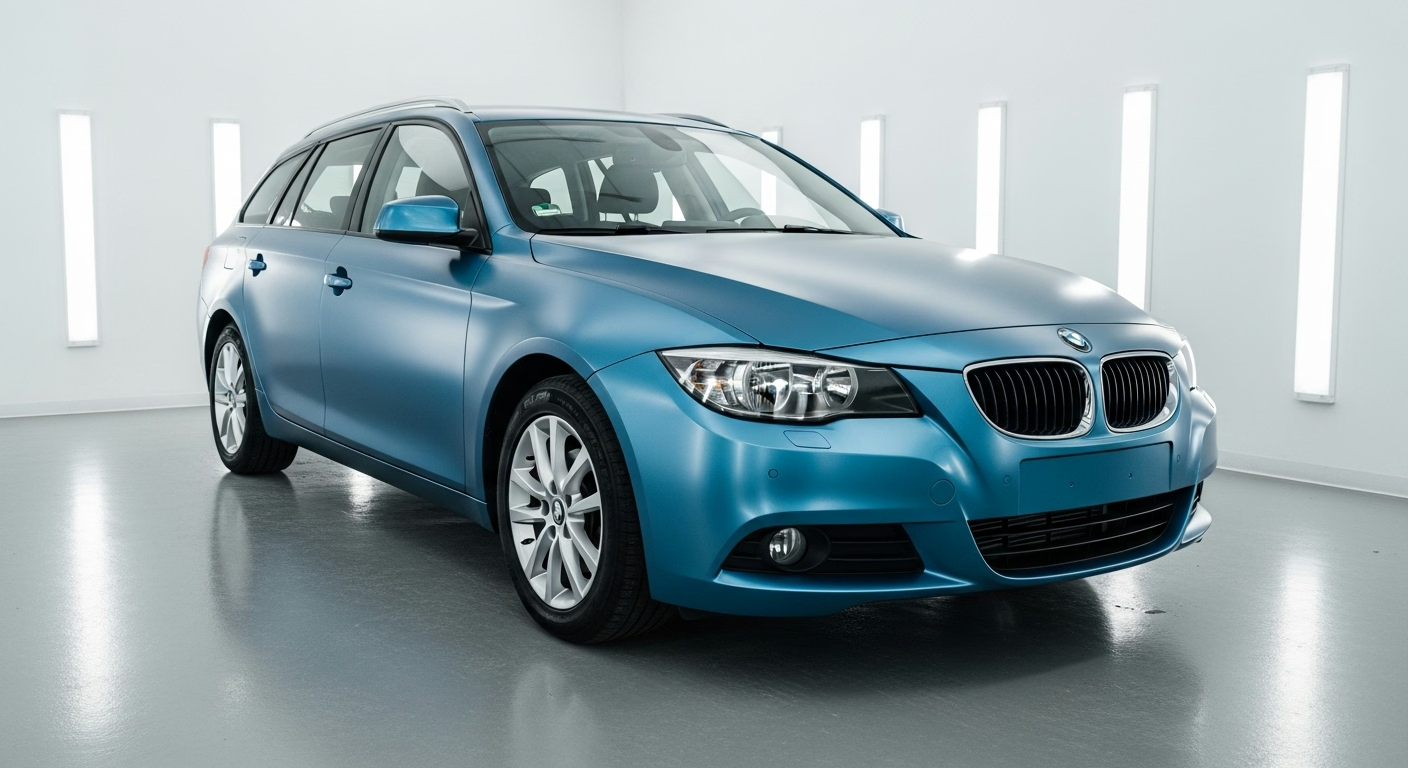
Pricing a vehicle wrap rarely produces a single number, because the figure depends on the body to be covered, the film chosen and the hours of skilled labour involved. In the United Kingdom market, a full car wrap commonly falls between 1,800 and 4,000 pounds fitted, with smaller cars closer to the lower bound and large sport utility vehicles or vans above it. Partial work, such as a roof or a bonnet, can start near 120 pounds.
This guide breaks the cost of a vehicle wrap into its real drivers: vehicle size, the surface to be covered, the film family, the finish and the labour. It also covers how a printed livery differs from a plain colour change, what a complete quote should contain, and how the price reads once it is spread across the working life of the film. The aim is a clear basis for comparison, not a fixed rate.
The headline price of a wrap combines four moving parts: the surface area to cover, the type of film, the finish and the time a fitter spends on the job. A plain colour change on a compact hatchback shares little with a full printed livery on a long-wheelbase van, even though both are described as a wrap. Understanding the drivers makes two quotes comparable.
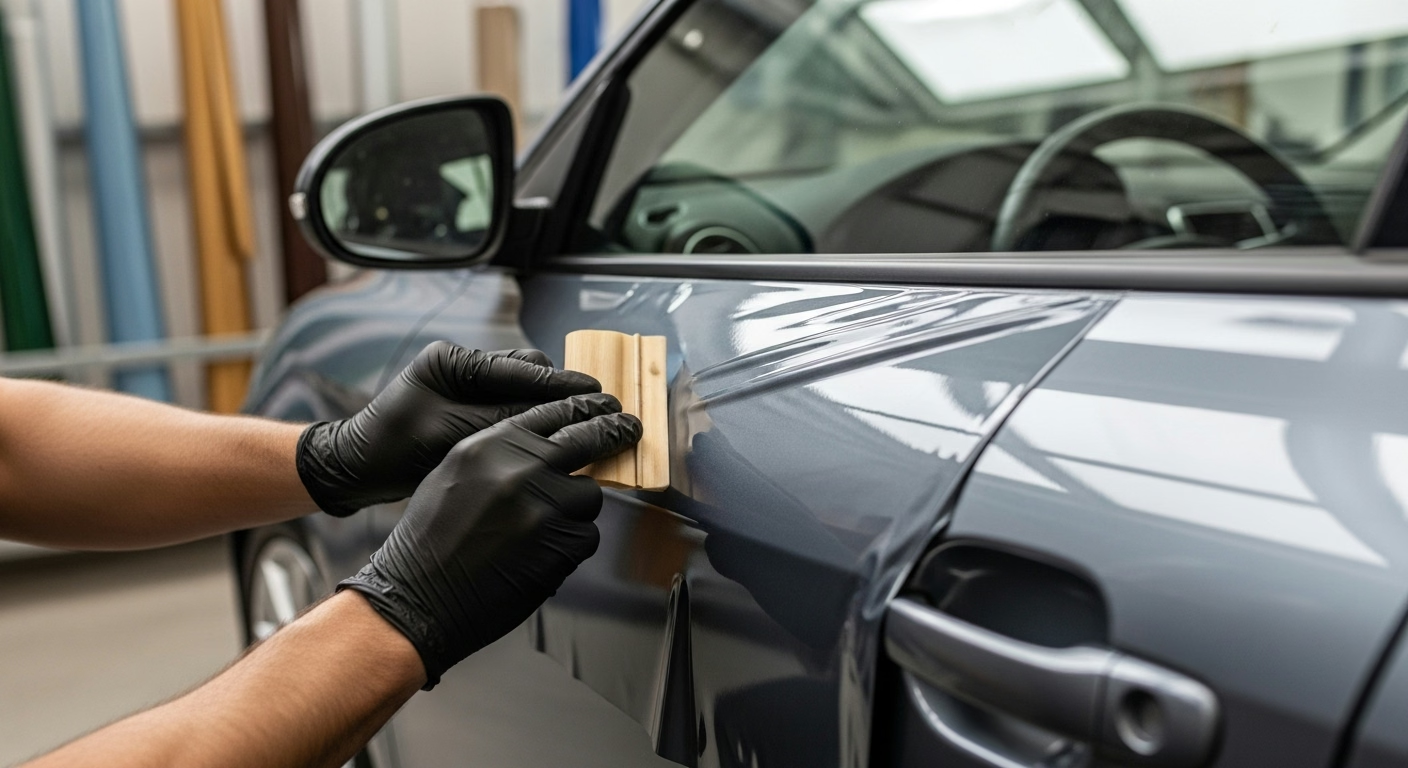
Surface area is the first lever. A larger body needs more film and more fitting time, so cost rises broadly with the size and complexity of the panels. Deep curves, recessed door handles, mirrors and bumpers take longer to cover cleanly than flat sides, which is why two vehicles of similar length can still carry different prices. A clear account of the available services helps a buyer match the brief to the right process.
The film itself is the second lever, and the gap between film families is wide. Cast and calendered vinyl differ in thickness, conformability and outdoor rating, and that difference flows straight into the quote. The technical contrast is set out in detail in a dedicated piece on vinyl vehicle wrap materials, which explains why a premium film costs several times more per square metre than an economy one.
The clearest way to read the market is by vehicle size, since surface area sets the baseline. The ranges below reflect figures commonly quoted by fitters across the United Kingdom for a professional full wrap, before any printed graphics are added.
These bands assume a quality film fitted by a trained installer. Budget jobs below the lower bound usually rely on thinner economy film or reduced surface preparation, which shortens the working life. For a precise figure on a specific body, the online configurator turns the brief into a structured quote in a few steps.
A full wrap covers every visible painted panel and reads as a complete colour change. A partial wrap covers selected areas, such as the roof, the bonnet, the doors or a stripe, and leaves the rest of the bodywork in its original colour. The price difference follows the covered area and the fitting time, so a partial job is the lower-cost route to a visual change or a branded message.
For a business that mainly needs a name, a contact detail and a logo on the doors and rear, printed lettering and decals deliver the message at a fraction of a full wrap price. That approach is described under vehicle lettering and decals, which suits operators who want presence on the road without a complete recolour. A partial wrap also reduces the area exposed to wear, which can simplify later maintenance.
Film is where many quotes diverge. Cast vinyl is poured and cured into a thin, stable layer that conforms to curves and resists shrink-back, and it carries the longer outdoor rating thanks to its ultraviolet stabiliser chemistry. Calendered vinyl is rolled from solid material into a thicker sheet, costs less and suits flat or gently curved panels. Both are forms of plasticised polyvinyl chloride, finished with a pressure-sensitive adhesive on the reverse.
The manufacturing route explains the cost gap. The calendering process documented by the British Plastics Federation produces film at a lower unit cost than casting, which is why economy wraps lean on calendered stock. A buyer weighing the two should read the price against the expected service life rather than the square-metre rate alone, since a cheaper film replaced sooner can cost more across several years.
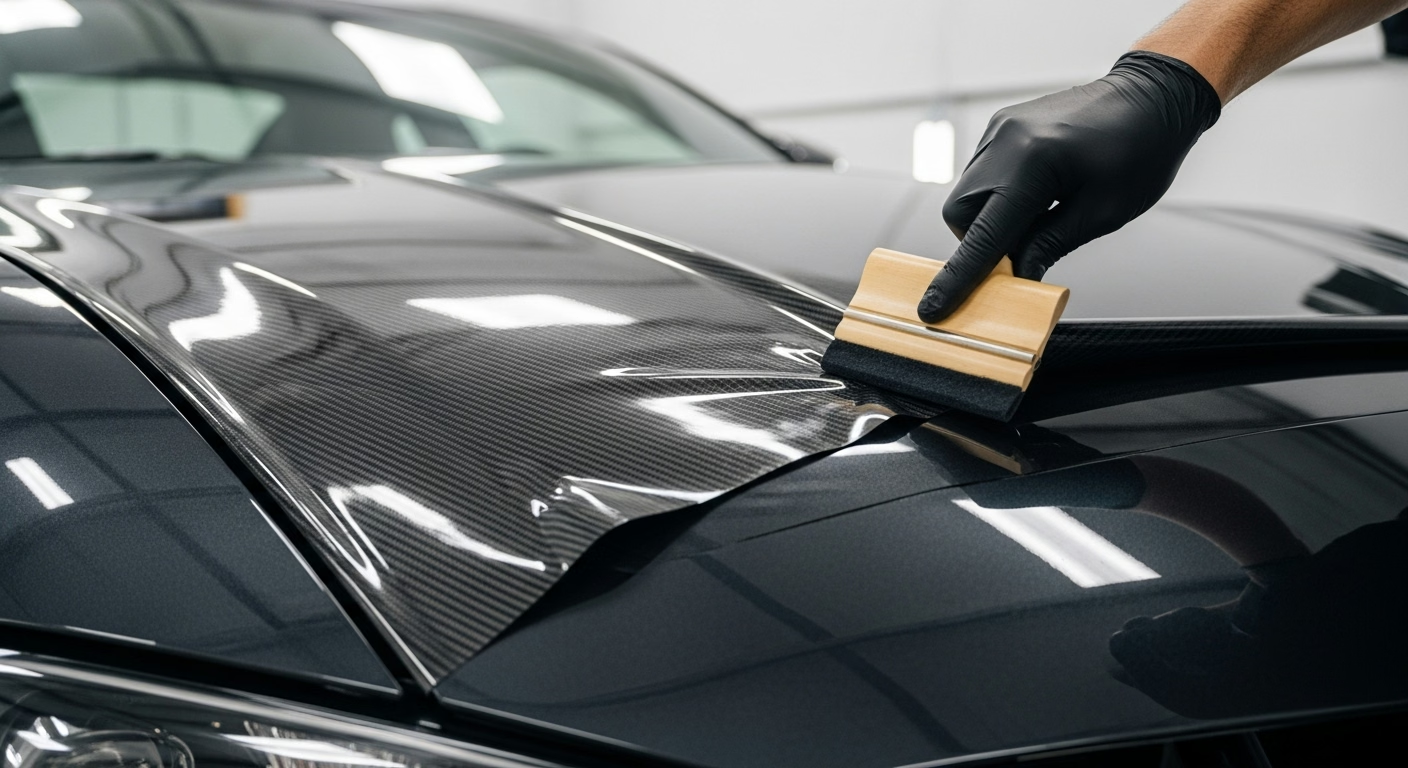
Finish sits on top of the film family and shifts the price again. Standard gloss and matt films are the most economical. Satin, metallic and brushed effects sit a step higher. Colour-shift, chrome and heavily textured films are the most expensive, because the base material is dearer and the fitting demands more care to keep the effect even across panels. The visual brief therefore has a direct cost, separate from the size of the vehicle.
Printed graphics add a further layer. A full printed livery involves design time, large-format printing, a protective laminate and contour work around panel edges, all of which raise the total above a plain colour change. The growth of printed advertising on vehicles, summarised in the overview of wrap advertising, reflects how many operators treat the surface as moving media rather than simple decoration.
A figure means little without a clear scope, so a sound quote itemises the work rather than offering a single round number. The buyer can then compare offers on equal terms and avoid a low headline price that excludes essential steps.
Value added tax applies to the service in the United Kingdom at the standard rate set out in the official VAT rates guidance, so a business should confirm whether a quote is stated with or without tax. Removal at end of life is easy to overlook, yet a clean professional removal is what keeps the original paint, and therefore the resale value, intact.
A single fitted price reads very differently once it is spread across the working life of the film. A cast wrap rated for five to seven years outdoors carries a lower annual cost than a calendered wrap replaced after two, even when the cast film costs more on day one. Horizontal panels such as roofs and bonnets age faster under direct sun, which is worth weighing where appearance must stay consistent.
For an operator running several vehicles, the unit cost usually falls when artwork repeats across the parc. The European vehicle stock is large and ageing, as the report on vehicles on European roads from the European automobile manufacturers association records, which keeps demand for refresh and rebranding work steady. The automotive wrap film market analysis points to continued growth in this segment, supported by both colour change and advertising use.
A few rules sit alongside the price and are cheap to respect at the planning stage. A full colour change must be recorded on the registration document: the procedure to change vehicle details on the V5C is set out by the licensing authority, and it costs nothing to file. The number plate must remain readable, as the rules on displaying number plates require, so film must never overlap the plate.
Where film sits near the glazing, the limits on tinted vehicle window rules still apply, and the construction and use framework is consolidated in the registration marks regulations. Material handling at end of life also matters, since the additives in plasticised film are under review, as noted in the European Chemicals Agency assessment of PVC additives. None of these points adds much to the bill, but each avoids a later problem.
The cost question connects to several services offered by Brands And Markets. A buyer new to the subject can start with the explainer on what a vehicle wrap is for a business, then move to the page on customised vehicle accessories for projects that pair a wrap with fitted extras.
For a structured fleet or special-edition brief, the approach to range animation for vehicle line-ups shows how repeated artwork is handled at scale, and a pass through the online configurator turns a rough idea into a comparable quote.
The cost of a vehicle wrap is best read as a build-up of measurable parts rather than a single rate: surface area, film family, finish, printed graphics and labour. In the United Kingdom market, a full car wrap commonly sits between 1,800 and 4,000 pounds, with smaller cars below and vans above, while partial work starts far lower.
A sound decision compares itemised quotes on equal terms and weighs the fitted price against the expected service life of the film. For a precise figure on a specific vehicle or a fleet, a structured quote through the configurator gives a firmer basis than any published range.
A full car wrap in the United Kingdom commonly falls between 1,800 and 4,000 pounds fitted. Compact cars sit nearer 1,200 to 2,000 pounds, while larger saloons and sport utility vehicles reach 2,000 to 3,500 pounds. Premium colour-shift or textured films, very large bodies and complex printed graphics can push a project beyond 4,000 pounds. The quote reflects surface area, film family, finish and labour rather than the film cost alone, which is why two cars of similar length can carry different prices.
A quality wrap and a quality respray often land in a similar price band, yet the two differ in what they deliver. A wrap is reversible, protects the original paint and allows printed graphics, while a respray permanently changes the bodywork. For a colour change kept for a few years, a wrap usually offers a lower total cost because the paint underneath stays intact and supports resale value. A respray can suit a permanent recolour where no reversal is intended.
A panel van wrap generally starts around 2,500 pounds and rises with size and graphic complexity. A plain colour change on a small van costs less than a full printed livery on a long-wheelbase model. Printed branding, contour cutting and a protective laminate add labour and material to the figure. A fleet brief with repeated artwork across several vans usually lowers the unit cost per vehicle, which is why operators tend to quote a programme rather than one van at a time.
In the United Kingdom a change of the main vehicle colour, whether by paint or by a full wrap, must be recorded on the V5C registration certificate and reported to the licensing authority. Partial graphics, stripes or lettering that leave the main colour unchanged do not require an update. The number plate and lights must stay fully visible at all times. Filing the change costs nothing and keeps insurance and roadside checks consistent with the vehicle appearance.
A professionally fitted cast film commonly lasts five to seven years outdoors, while a calendered film lasts one to three years before colour fade or edge lifting appears. Spreading the fitted cost across that lifespan gives a clearer annual figure than the headline price. Garaging the vehicle, limiting sun exposure and gentle hand washing extend the working life. A planned removal before the film degrades protects the paint and keeps the bodywork ready for its next finish.
Prêt à transformer votre projet ? Discutons de vos besoins et de la manière dont nous pouvons collaborer.
Adresse : 28 rue Fresnel – F-78310 COIGNIERES
Téléphone : 01 85 40 01 75