July 30, 2026
Chrome is the most demanding finish in the wrap family. The metallised film that creates the mirror effect costs more, tolerates less during installation and ages faster than a standard colour film. This guide covers the technique, price, lifespan and UK rules.
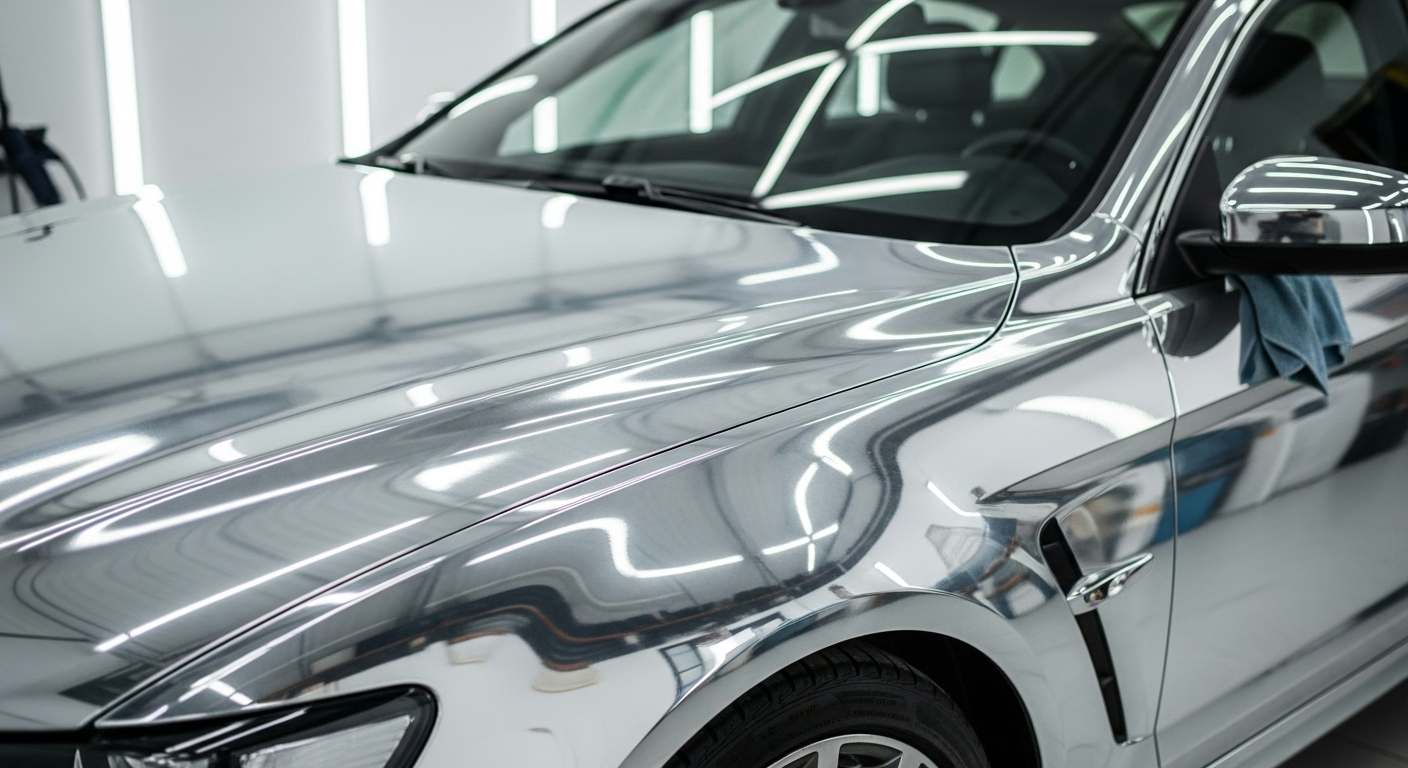
A chrome vehicle wrap turns bodywork into a mirror. The finish reproduces the look of traditional chrome plating with an adhesive film rather than an electroplated metal layer, and it remains the most photographed finish at shows and launch events. It is also, by a clear margin, the most demanding finish in the wrap family: the film costs more, tolerates less during installation and ages faster than a standard colour film.
That behaviour is not a marketing nuance, it follows directly from the construction of the material. The mirror effect relies on a metallised layer inside the film, and that layer changes how the product stretches, how it reacts to heat and how it wears. Before committing a show car, a launch vehicle or a fleet flagship to a chrome finish, a decision maker needs a clear view of the technical constraints, the price positioning, the realistic service life and the legal points that apply in the United Kingdom.
One figure frames the whole subject: where a quality cast colour film is commonly expected to serve five to seven years outdoors, the service lives quoted in the trade for chrome films generally sit between two and four years. The sections below explain why, and what that means in practice.
A chrome wrap film is built like other wrap films, with one decisive addition. The base remains a flexible PVC construction coated with a pressure sensitive adhesive. On top of that base, the manufacturer adds an extremely thin metallised layer, then a clear protective layer. It is this metallic layer, not a pigment, that produces the mirror effect.
The optical behaviour is what physicists call specular reflection: incoming light bounces off the surface at a single angle instead of scattering, so the panel reflects its surroundings like polished metal. A gloss colour film reflects perhaps a soft sheen of light; a chrome film reflects the buildings, the sky and the photographer. The difference between the finishes of the wrap family is covered in more depth in the guide to cast and calendered wrap materials.
That construction has three practical consequences. The film is thicker and stiffer than a standard cast colour film. It stretches far less before the metallised layer distorts. And because the surface behaves like a mirror, it magnifies every defect in the panel underneath: a grain of dust trapped under the film, a stone chip or a wavy repair all become visible.
Chrome belongs to the language of the show floor. The finish photographs spectacularly, stops passers-by and signals that a vehicle is out of the ordinary, which is why it appears on launch vehicles, demonstration cars and event fleets far more often than on daily drivers. As a mobile attention device it plays the same role that wrap advertising plays for commercial fleets, pushed to its maximum intensity.
Classic mirror silver is only the starting point. Metallised films exist in gold, blue, red, black chrome and satin chrome variants, and the same reflective logic applies to each of them. Positioning chrome against the rest of the palette, from gloss and matte to satin and colour flip effects, is easier with a structured overview of the wrap colours and finishes available.
Full chrome is not the only format. Because the material is expensive and demanding, many projects reserve it for accent zones: a roof, mirror caps, a bonnet stripe or trim details over a standard base colour. The contrast between a restrained body colour, for example a finish close to a matte black wrap, and a few mirror accents often delivers more visual impact per pound than a full mirror body.
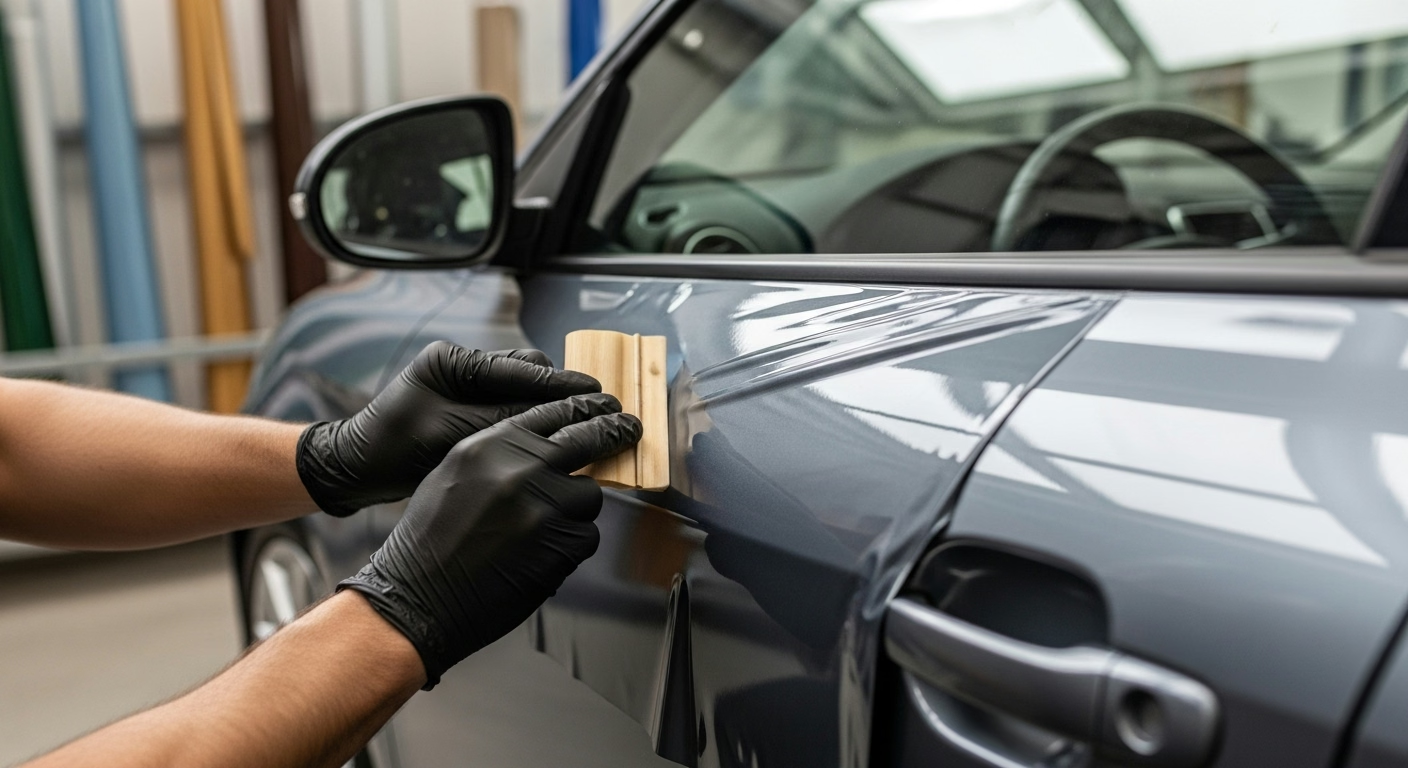
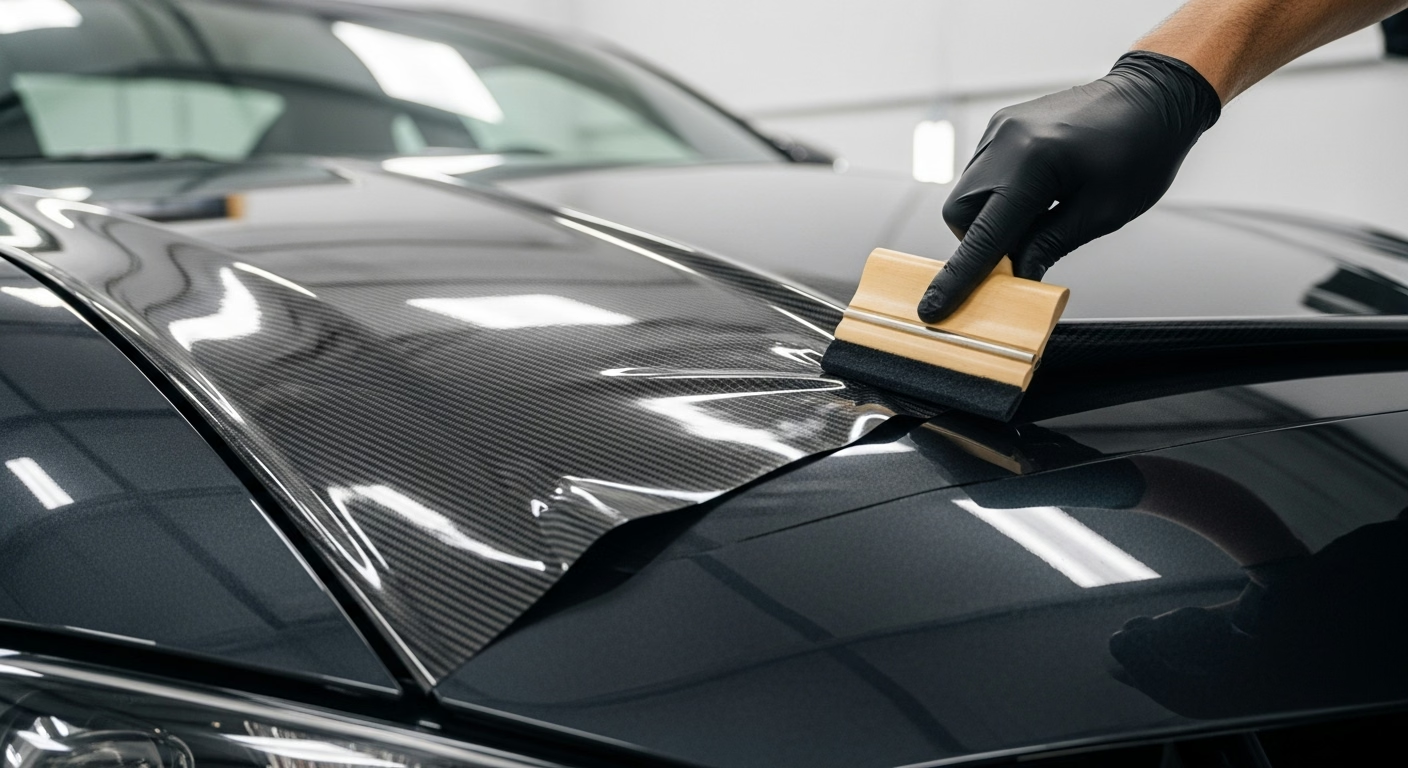
Chrome separates experienced fitters from occasional ones. A standard cast film forgives: it stretches around curves, relaxes with heat and allows repositioning. The metallised layer in a chrome film does not share that tolerance. Overstretching thins the metal and whitens the finish; excessive heat distorts the mirror and creates visible ripples; aggressive squeegee work leaves permanent micro scratches.
In practice, an installer working with chrome follows tighter rules than with any other finish:
This is also why chrome is a poor candidate for self installation. The general arguments covered in the article on DIY vehicle wrapping apply twice over here: the material is unforgiving, the offcut waste is expensive and a failed panel cannot be rescued by reheating and repositioning the film.
Chrome occupies the top of the wrap price scale. Two factors drive the position: the film itself costs several times the price of a standard colour film per metre, and the installation takes longer because of the constraints described above. As a working rule, professionals quote a full chrome wrap at two to three times the price of a comparable full colour change in a standard gloss film.
The baseline matters more than any absolute figure, because vehicle size, panel complexity and paint condition move every quote. The reference points for a standard project are detailed in the guide to vehicle wrap cost; a chrome project starts from those figures and multiplies them. Partial chrome, on a roof or on accents, keeps the budget closer to a standard project while preserving the visual effect.
Demand for effect finishes is not marginal: market analyses such as the automotive wrap film market report by Grand View Research track sustained growth for wrap films overall, with speciality finishes among the drivers. Growth has not, however, changed the economics of chrome: it remains a premium product for targeted uses.
Chrome ages faster than any mainstream wrap finish. The metallised layer is more sensitive to ultraviolet radiation than a pigmented film, and even a UK climate delivers a meaningful UV load across the year. Horizontal panels, bonnets and roofs, take the highest dose and dull first. Where a quality cast colour film commonly serves five to seven years, as detailed in the article on how long a vehicle wrap lasts, chrome films are generally quoted between two and four years outdoors, and less on heavily exposed panels.
Care rules are stricter as well. Careful hand washing with a neutral product is the accepted method. Automatic brush washes are ruled out, because brushes leave micro scratches that a mirror surface displays immediately. Abrasive polishes and cutting compounds are equally excluded: they attack the clear layer and dull the metallised layer underneath. Bird droppings, tree sap and fuel splashes need removing promptly, since etching marks that a colour film would mask stay visible on chrome.
Sheltered parking changes the equation significantly. A show or event vehicle stored indoors between appearances can keep a chrome finish presentable well beyond the outdoor figures, which is precisely how the finish is most often used.
No UK regulation bans a chrome finish as such. Three obligations still apply. First, a wrap that changes the colour of the vehicle must be reported to the DVLA so the registration certificate stays accurate: the procedure for changing vehicle details on the V5C is described on GOV.UK, including how to tell the DVLA in practice. The registration framework itself sits in the Road Vehicles (Registration and Licensing) Regulations 2002.
Second, the vehicle must remain safe for the road. The Road Vehicles (Construction and Use) Regulations 1986 require a vehicle to be maintained so that it causes no danger, and an excessively reflective surface that dazzles other road users can be challenged under that principle. Highly reflective finishes therefore deserve a conversation with the fitter about panel choice and finish intensity, alongside the routine checks that apply at MOT time. General guidance on motoring law is also maintained by the RAC legal advice pages.
Third, the insurer must know. A wrap is a modification, and insurers expect to be told about it, as the AA explains in its guidance on car modifications. Staying silent is the riskier route, since an undeclared modification is one of the situations that can invalidate a policy.
The subject of this article connects with several services offered by Brands And Markets. For a branded project that combines effect finishes with lettering or graphic elements, the page dedicated to vehicle lettering and decals details the available options, and the services overview maps the full offer.
For a structured project, a launch fleet or a series of event vehicles, the online configurator provides a visual simulation and a first budget frame in a few steps.
A chrome vehicle wrap is a deliberate trade: maximum visual impact against a higher price, a demanding installation and a shorter service life. The metallised construction that creates the mirror also creates every constraint that follows from it, which is why the finish rewards projects with a defined purpose, a controlled exposure and an experienced fitter.
For a decision maker, the practical route is to define the role of the finish first, full mirror body or targeted accents, then to compare quotes on identical scope: film grade, panel preparation, seam placement and care instructions. On that basis, chrome delivers exactly what it promises, a vehicle that no one walks past without looking.
Service lives commonly quoted in the trade sit between two and four years in daily outdoor use, noticeably shorter than the five to seven years expected from a quality cast colour film. The metallised layer is the limiting factor: it is more sensitive to ultraviolet exposure than a pigmented film, so horizontal panels such as bonnets and roofs dull first. Storage makes a large difference. A vehicle kept indoors between appearances, which is the typical pattern for show and event cars, keeps a chrome finish presentable well beyond the outdoor figures. Prompt removal of contaminants and strict hand washing also extend the usable life of the finish.
No UK rule bans chrome film as such. Three obligations frame its use. The colour change must be reported to the DVLA so the V5C registration certificate stays accurate. The vehicle must remain safe under the Road Vehicles (Construction and Use) Regulations 1986, which means an excessively reflective surface that dazzles other road users can be challenged even though no text names chrome specifically. And the insurer must be informed, because a wrap is a modification and an undeclared modification can invalidate a policy. In practice, fitters manage the dazzle question through panel choice and finish intensity, for example satin chrome rather than full mirror on large vertical surfaces.
A full chrome wrap is generally quoted at two to three times the price of a comparable full colour change in a standard gloss film. Two factors drive the premium: the metallised film costs several times more per metre than a standard colour film, and installation takes longer because stretch, heat and handling must all be tightly controlled. Absolute figures depend on vehicle size, panel complexity and paint condition, so the useful method is to establish the baseline for a standard wrap on the same vehicle and apply the multiple. Partial chrome, on a roof, mirror caps or trim accents, keeps the budget close to a standard project while preserving most of the visual effect.
The metallised layer that creates the mirror effect is the reason. It stretches far less than a standard cast film before it distorts: pulling the film into a deep recess thins the metal and whitens the finish, and excessive heat creates permanent ripples in the mirror. The surface also magnifies every defect, so panel preparation must be flawless and squeegee work must avoid micro scratches that a colour film would hide. Fitters respond with slower handling, minimal stretch, seams around complex shapes and sparing, even heat. A failed chrome panel cannot be rescued by reheating and repositioning, which raises the cost of every mistake and explains why the finish is reserved for experienced installers.
Automatic brush washes are ruled out for a chrome finish. The rotating brushes leave micro scratches that a mirror surface displays immediately, where a pigmented film would mask them. Careful hand washing with a neutral product and soft cloths is the accepted method, and contactless lance washing at moderate pressure, kept away from film edges, is generally tolerated. Abrasive polishes and cutting compounds are excluded in all cases because they attack the clear protective layer and dull the metallised layer underneath. Contaminants such as bird droppings, tree sap or fuel splashes should be removed promptly, since they etch marks into the surface that no later treatment can polish out.
Prêt à transformer votre projet ? Discutons de vos besoins et de la manière dont nous pouvons collaborer.
Adresse : 28 rue Fresnel – F-78310 COIGNIERES
Téléphone : 01 85 40 01 75